
Collecting Consent Forms Isn't the Same as Knowing Who's Cleared
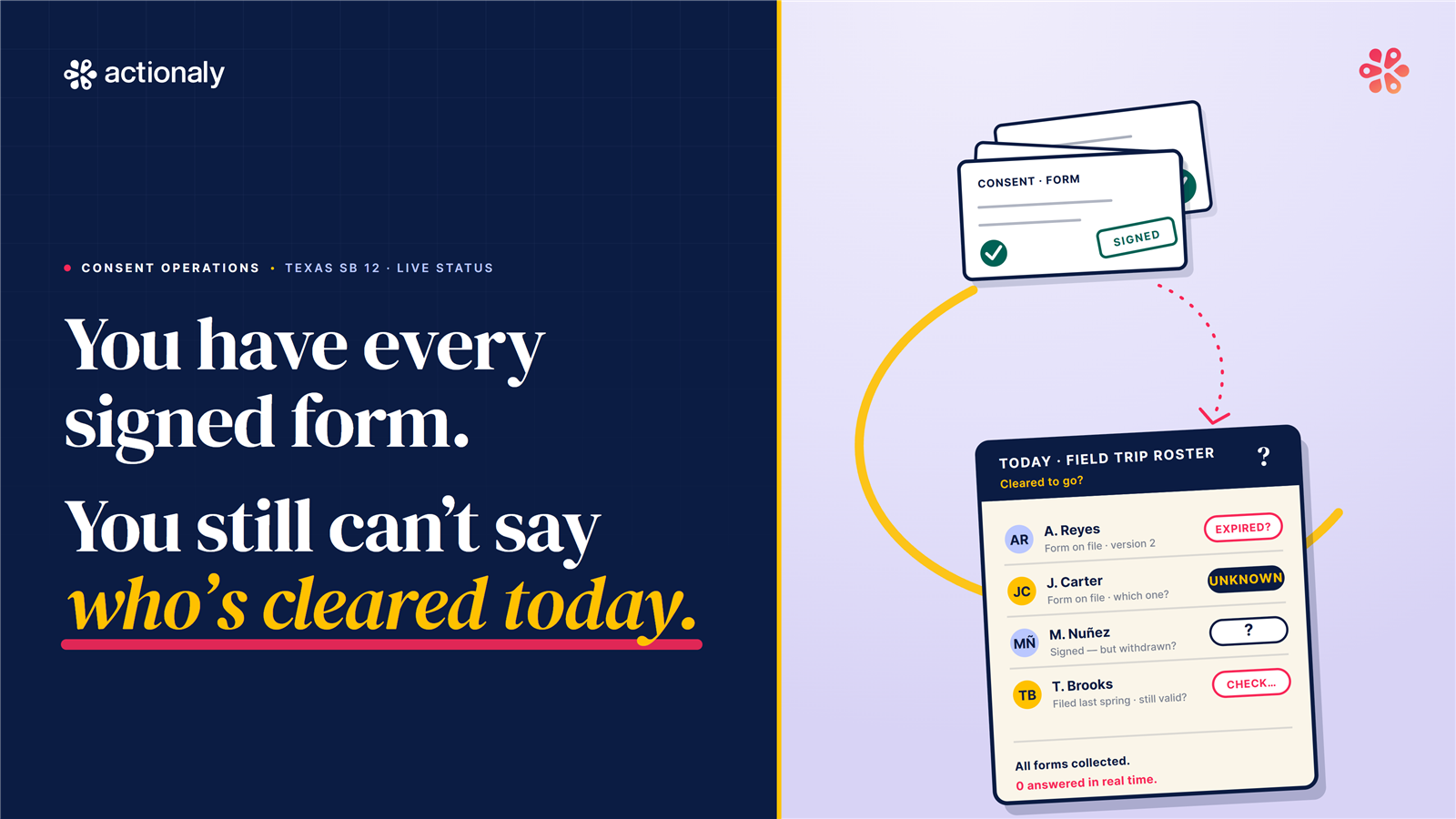
A student walks into the nurse's office in October. Before much can happen, someone has to answer a narrow question: is this student cleared for this service, today? The signed forms exist. They went home in August, came back, and got filed. But "on file" and "answerable in the moment" are not the same thing, and the space between them is where a lot of Texas districts are quietly stuck this year.
The paperwork got done. That was the hard part everyone planned for. The part that's catching districts off guard is what comes after: turning a stack of completed forms into an answer a staff member can get in ten seconds, for one student, for one program, on a random Tuesday in the middle of the year.
Collecting the Forms and Knowing Who's Cleared Are Two Different Jobs
Collecting consent is real work, and it's harder than it used to be. But a completed stack of forms is a snapshot of one moment. Eligibility is a moving target. Rosters shift, students join clubs mid-year, families change their minds, and a form that was accurate in September may not describe the situation in February.
In 2023-24, about one in six Texas students (16.4%, or 882,523 kids) weren't continuously enrolled at a single campus for the full year, by the state's own mobility measure. That number measures roster movement rather than a consent gap. An October transfer simply isn't in the August consent run, so that student's eligibility for a covered service sits blank until someone goes looking, even though no parent ever declined.
That's why a district can have every form on file and still not be able to answer "can this student do this today?" without someone reconciling records by hand. The new consent laws didn't only add forms to collect. They turned consent into a status that someone, somewhere, has to be able to look up on demand. Getting the signatures and being able to answer the question are two separate jobs, and most districts staffed up for the first one.
Your Student Information System Holds the Signed Form, Not the Live Answer
The student information system is the system of record for enrollment. It's where the once-a-year packet lives, the one a parent logs in to complete, and it does that job well. When districts assume they're covered on consent, this is usually the tool they're picturing.
 The enrollment system captures the signature, not who's cleared today.
The trouble is that enrollment capture and live per-program eligibility are different jobs. A Texas district now juggles at least eight distinct statutory consent categories across federal and state law, from FERPA directory opt-outs and IDEA evaluation consents to SB 12 health services, SB 12 club participation, SB 9 sensitive-content instruction, and software-app consent under HB 18. Most of those are event-driven. They get pushed to parents on their own timing across the year, not captured once at enrollment. An enrollment system doesn't chase the parents who didn't respond, and it doesn't answer, live, per student, per program. It was built to hold the form, and it holds the form.
The Question Gets Asked at the Clinic Counter, Not the Filing Cabinet
For covered services, consent under SB 12 (effective September 1, 2025) is a precondition for the service. A district must have the required parental consent before providing certain health services, and under Tex. Educ. Code §26.009(d) it's required to discipline staff who serve a student without it. So the person who most needs the answer isn't in the front office. It's the nurse, with a student in front of her, right now.
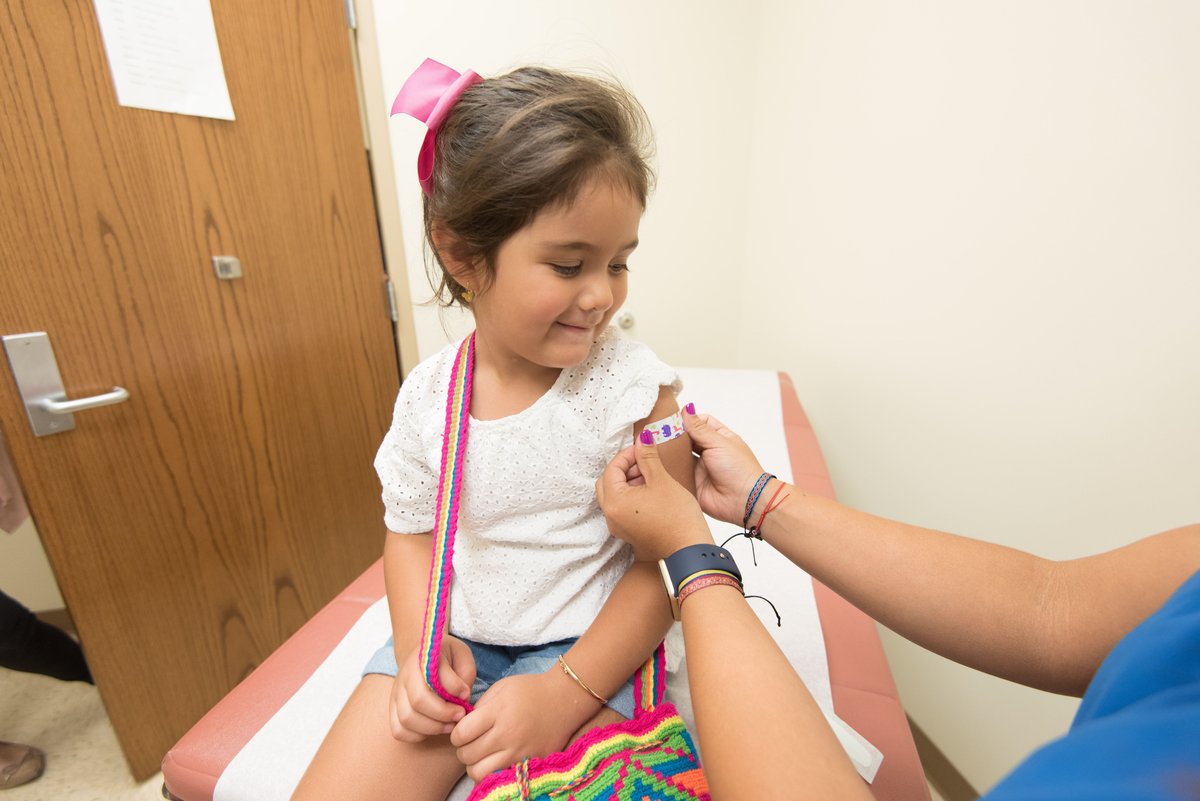 For covered services, the person who needs the answer is at the counter.
Hollie Smith, President-Elect of the Texas School Nurses Organization, described what the question feels like from behind the counter after SB 12 took effect. For her nurses, she said, it comes down to a single worry: is my license in jeopardy? That uncertainty, in her words, "is where a lot of our nurses are trying to practice from right now, and feeling really uneasy." When the only way to confirm clearance is to go find the form, the cautious move is to hesitate, and a student who was in fact cleared can end up waiting. The rule itself is reasonable. What's missing is a faster, more reliable way to know, in the moment, that a student is cleared to be helped, so the nurse can act instead of hesitate.
When the Answer Lives in a Drawer, Every Question Is a Reconstruction
There's a useful preview of this problem in a neighboring corner of district operations. When Internet Safety Labs benchmarked 663 schools across the country in 2022, its researchers couldn't get a clean list of the apps each district actually ran. They had to hand-count them off school and district websites, because the districts couldn't produce a straight inventory of their own tools.
Consent status is the same reconstruct-by-hand problem, one step harder. If a district can't readily produce a list of the software it uses, the odds it can produce a per-student, per-program consent status on demand are worse, not better, because that status is tied to individual students and it changes week to week. Every question becomes a small research project, and the person asking usually needs the answer faster than a research project allows.
What Live Eligibility Looks Like When It Works
This is a solvable problem, and districts are solving it. The move is to stop treating consent status as a document in a drawer and start treating it as a live property of the student. When eligibility attaches to the student and stays current as rosters and decisions change, the nurse's question turns from a hunt into a lookup. Purpose-built consent systems are designed around exactly this: an answerable, per-student record of who is cleared for what, right now.
 When status attaches to the student, the check takes seconds, not a search.
The operational difference is concrete. One Hill Country district we work with went from spending hours per grade reconciling consent by hand to preparing campus-wide consent in about 15 minutes, with response rates staying above 75% once automated reminders chase the families who haven't answered yet. The forms still matter. What changed is that the answer to "who's cleared?" stopped requiring a search.
We work on the parental-consent side of K-12 in Texas, helping districts turn signed forms into a live, per-student record their staff can check the moment they need it, across the covered programs SB 12 and its peers created and alongside the SIS rather than on top of the special-education systems that carry their own consent rules. If knowing who's cleared today is harder in your district than it should be, that's the gap we work on, and we're glad to walk through what it looks like in practice.